Born in North Africa
Augustine was born in Tagaste, in present-day Algeria. His mother, Monica, was a devoted Christian; his father, Patricius, remained a pagan through much of Augustine’s youth.
Saints of the Catholic Church • August 28
Conversion, grace, and the restless heart
“You have made us for yourself, O Lord, and our heart is restless until it rests in you.” Confessions, Book I
Few saints demonstrate the transforming power of God’s grace as clearly as St. Augustine of Hippo.
Before becoming one of the Church’s greatest theologians, Augustine spent years searching for truth. He wrestled with questions about God, evil, freedom, morality, happiness, and the meaning of life.
His conversion was not a rejection of reason. It was the culmination of a long intellectual, moral, and spiritual search.
The long road home
Augustine was born in Tagaste, in present-day Algeria. His mother, Monica, was a devoted Christian; his father, Patricius, remained a pagan through much of Augustine’s youth.
Seeking an answer to the problem of evil, Augustine joined the Manichaeans. He eventually found their explanations unsatisfying and continued through skepticism and Neoplatonic philosophy.
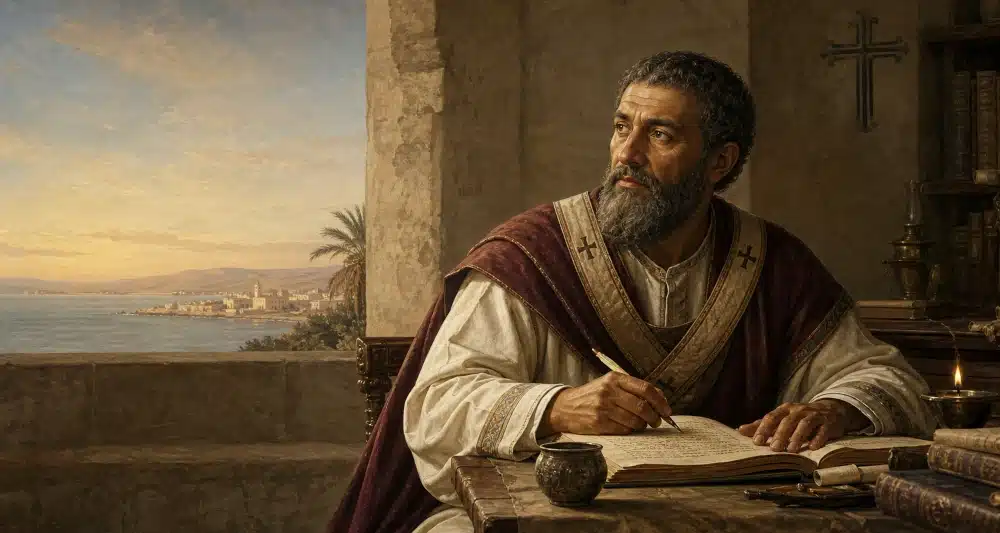
St. Ambrose ’s preaching revealed a more sophisticated Christianity and a deeper reading of Scripture.
The turning point
In a Milanese garden, years of questioning, philosophy, disappointment, Scripture, and Monica’s prayer came together in surrender.
St. Ambrose baptized Augustine during the Easter Vigil of April 23–24. Through the sacrament of Baptism , Augustine entered fully into the life of the Church at age 32.
Back in Africa, Augustine was ordained a priest and later succeeded as Bishop of Hippo.
As Vandals besieged Hippo, Augustine died on August 28, leaving one of the early Church’s most influential bodies of writing.
A mother’s faithful prayer
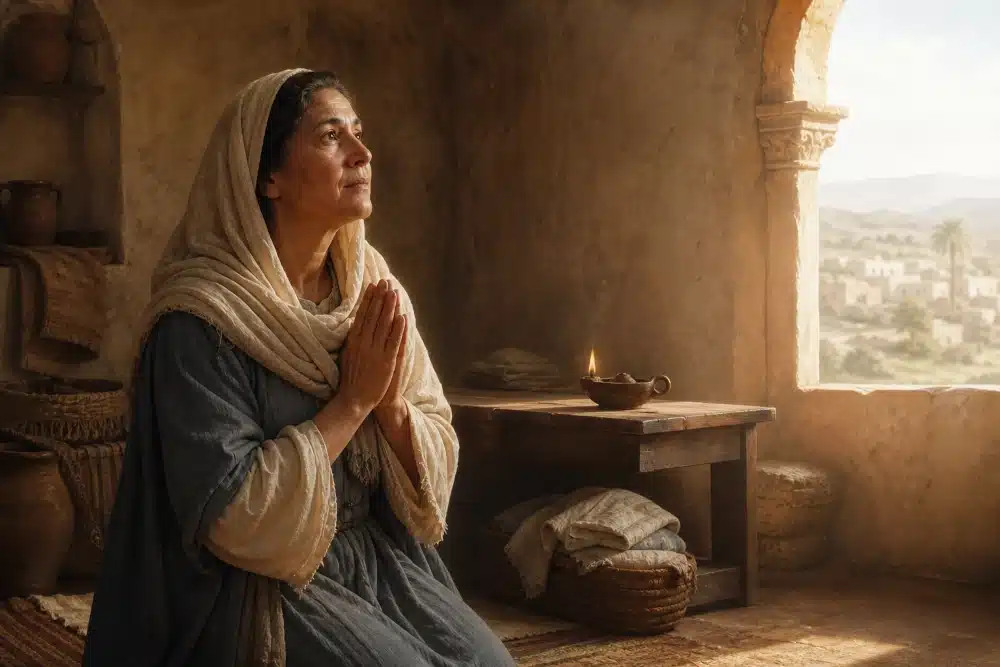
As Augustine moved farther from the Church, Monica continued to pray for him. She could not force her son to believe. She could remain faithful and entrust him to God.
Her long wait reminds Catholics that prayer does not always produce immediate, visible results. Grace may unfold over many years.
The son whose spiritual life caused her such sorrow became one of Christianity’s greatest saints and teachers.
The written legacy
A spiritual autobiography written as prayer, examining of memory, desire, sin, and conversion before God.
A sweeping meditation on history, political power, human ambition, and humanity’s ultimate destiny.
Scripture, reason, and theological reflection brought together in contemplation of the Holy Trinity .
Augustine’s late-life review of his own writings, an enduring witness to intellectual humility.
At the heart of his thought
Evil is not a created substance or a power equal to God. It is an absence or corruption of a good that ought to be present.
Knowledge alone does not heal every disorder of the heart. Salvation is God’s gift, not a human achievement; grace enables our response.
What Catholics can learn
Grace worked through people, books, questions, preaching, Scripture, philosophy, and prayer.
Honest intellectual inquiry became part of Augustine’s journey toward becoming Catholic .
Monica could not force belief, but her faithful prayer accompanied his conversion.
Augustine recognized Christianity’s truth before he reordered his life around it.
Common questions
No. Though raised as a Christian catechumen, Augustine spent years with Manichaeism before embracing Catholic Christianity.
St. Ambrose baptized him at the Easter Vigil of April 23–24, 387.
He was ordained in 391, consecrated coadjutor around 395–396, and succeeded as bishop around 397.
The title Doctor of the Church recognizes the exceptional and lasting value of his teaching.
The intellectual journey
Augustine’s conversion was both spiritual and intellectual. He wanted answers to the most difficult questions human beings can ask.
His intellectual restlessness helps explain why his writings remain relevant more than sixteen centuries later. Augustine understood that beneath our individual questions is often a deeper search for meaning, happiness, truth, and ultimately God.
Platonist and Neoplatonist ideas helped him think differently about spiritual reality, God, and evil. Philosophy removed some of the intellectual barriers that had prevented him from taking Christianity seriously. But philosophy was not his final destination.
Augustine did not become Christian by abandoning his intellect. His intellectual gifts became part of his Christian vocation. That harmony became one of the enduring characteristics of Catholic intellectual life.
A life of service
After returning to North Africa, Augustine hoped to pursue a life centered on prayer, study, and Christian community. Instead, he was ordained a priest at Hippo around 391. Within several years, he entered the episcopate and eventually became Bishop of Hippo.
He was no longer simply a philosopher or private Christian scholar. He had to preach, teach, administer the local Church, care for his people, interpret Scripture, respond to theological controversies, and defend Catholic teaching.
Augustine addressed questions involving grace, free will, sin, baptism, Scripture, the Church, creation, the Trinity, Christian moral action , and the nature of evil.
His pastoral ministry matters because his theology was not produced only in an academic setting. He was a bishop responsible for real people facing real spiritual, moral, and doctrinal questions.
The final years of Rome
Augustine lived during enormous political and cultural change. Rome was sacked in 410, creating profound anxiety throughout the Roman world. Some critics blamed Christianity for Rome’s troubles.
Augustine responded in The City of God, placing earthly political societies within a much larger Christian understanding of history. No civilization’s success or failure should be confused with the ultimate purposes of God.
By 430, the Vandals were besieging Hippo. Augustine died on August 28 during the siege, leaving one of the early Church Fathers’ largest and most influential bodies of theological writing.
A saint for restless hearts
Augustine knew ambition, temptation, doubt, intellectual pride, moral struggle, and the difficulty of changing a life even after recognizing that change was necessary. But he also came to know grace.
Christianity did not require Augustine to abandon his intellect. It gave his intellect a new purpose. The teacher became a bishop. The seeker became a defender of the faith. The man who spent years resisting conversion became a saint.
His life does not teach that faith eliminates every difficult question. It demonstrates that our questions can become part of the journey toward God. It does not teach that every conversion happens quickly. Augustine’s own journey took years. And it does not allow us to assume that someone’s past determines his or her future.
To bring these themes into personal prayer, pray with Augustine through guided reflections on restlessness, desire, rightly ordered love, and rest in God.
“St. Augustine of Hippo,” Catholic Encyclopedia, hosted by New Advent. Consulted for Augustine’s biography, chronology, episcopal ministry, and historical context.
Why Augustine still matters
For Catholics who are searching, questioning, returning to the faith, or praying for someone who has wandered away, St. Augustine offers enduring hope.
Explore the Doctors of the Church