
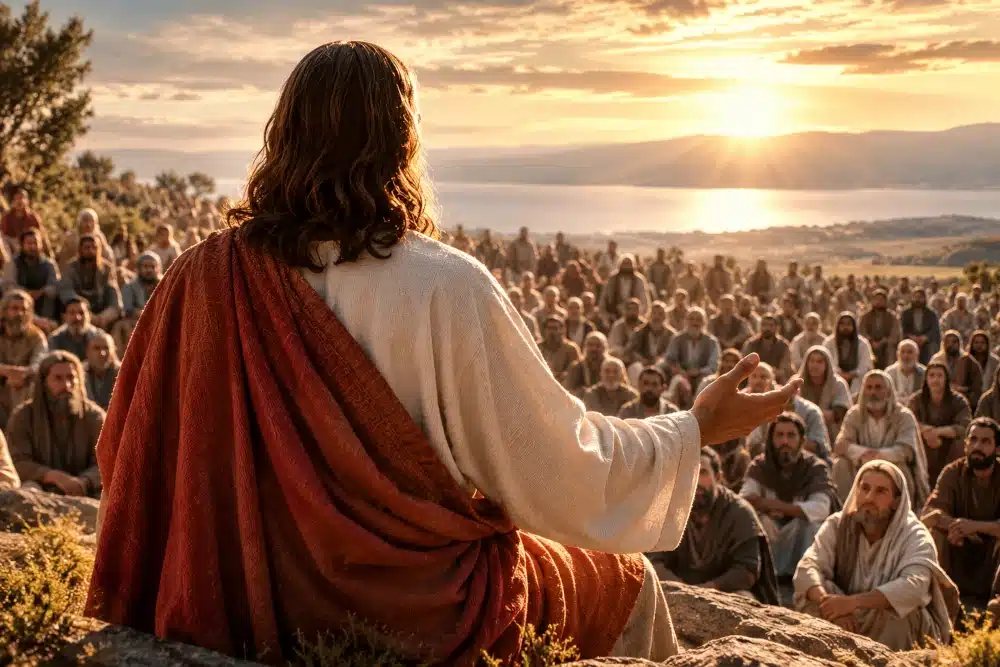
The Beatitudes reveal the character of Jesus and describe the life every Christian is called to live.
What Are the Beatitudes?
Few passages of Sacred Scripture have influenced Christian life as profoundly as the Beatitudes. Spoken by Jesus at the beginning of His Sermon on the Mount, they introduce the heart of His public ministry and establish the values of the Kingdom of Heaven. Before teaching about prayer, fasting, forgiveness, charity, and love of enemies, Jesus first teaches His disciples what it truly means to be blessed.
At first glance, the Beatitudes seem almost backwards. The world admires wealth, power, influence, and self-sufficiency. Jesus blesses the poor in spirit, the meek, the merciful, the pure in heart, and even those who are persecuted for doing what is right.
His words challenge every human assumption about success. They reveal that God's Kingdom operates according to an entirely different set of values than the kingdoms of this world.
"Seeing the crowds, he went up on the mountain, and when he sat down his disciples came to him. And he opened his mouth and taught them..."Matthew 5:1-2
The Catechism of the Catholic Church calls the Beatitudes the heart of Jesus' preaching because they reveal His own charity and describe the vocation of every Christian. They answer the deepest desire of the human heart: the desire for happiness, fulfillment, and communion with God.
The Beatitudes are not reserved for priests, religious, or canonized saints. They are Christ's invitation to every baptized believer. Whether we are parents, students, business owners, retirees, or children, Jesus calls each of us to embrace these blessings as the pattern for daily life.
What Does the Word "Beatitude" Mean?
The English word Beatitude comes from the Latin beatus, meaning blessed, happy, or deeply fulfilled. The Greek word used by Saint Matthew is makarios, describing the lasting happiness that comes from God's favor rather than changing earthly circumstances.
Worldly Happiness
- Depends upon circumstances.
- Measured by success.
- Often tied to wealth.
- Can disappear overnight.
- Temporary by nature.
Christian Blessedness
- Rooted in God's grace.
- Endures through suffering.
- Produces lasting peace.
- Flows from communion with Christ.
- Points toward eternal life.
Remember
Jesus is not promising an easy life. He is revealing the kind of life that leads to eternal joy.
The Beatitudes answer one of humanity's oldest questions:
"What will truly make me happy?"
Christ's answer surprises every generation because it directs our attention away from temporary pleasures and toward a relationship with God that can never be taken away.
Why the Beatitudes Are Paradoxical
Nearly every Beatitude appears to contradict ordinary human thinking. Society teaches us to pursue comfort, recognition, independence, and power. Jesus points toward humility, sacrifice, mercy, and self-giving love.
The World Says
- Promote yourself.
- Win every argument.
- Avoid suffering.
- Seek power.
- Protect yourself first.
Christ Says
- Be poor in spirit.
- Be meek.
- Show mercy.
- Make peace.
- Remain faithful through persecution.
The Cross itself becomes the greatest example of this divine paradox. What appeared to be defeat became victory. What looked like weakness became the means of salvation. Death opened the way to eternal life.
The Beatitudes prepare us to understand this mystery. God's greatest work is often accomplished through humility rather than pride, sacrifice rather than selfish ambition, and love rather than force.
Jesus as the New Moses
When Saint Matthew describes Jesus ascending a mountain before He begins teaching, he is doing much more than telling us where the sermon took place. He is inviting us to recognize one of the great parallels between the Old and New Testaments.
In the Book of Exodus, Moses climbed Mount Sinai to receive the Law from God. There, the Ten Commandments established Israel as God's covenant people and revealed how they were to live in relationship with Him and with one another.
Jesus also ascends a mountain, but unlike Moses, He does not receive the Law from another. He speaks with His own divine authority.
Moses on Mount Sinai
- Received God's Law.
- Established the Old Covenant.
- Delivered the Ten Commandments.
- Led Israel toward the Promised Land.
Jesus on the Mount
- Fulfills the Law.
- Proclaims the Kingdom of Heaven.
- Transforms the human heart.
- Leads humanity toward eternal life.
This connection is essential to understanding the Beatitudes. Jesus does not abolish the Law given through Moses. Instead, He reveals its deepest meaning by calling His followers to an interior holiness that flows from grace.
The Ten Commandments teach God's people what they must avoid. The Beatitudes reveal the kind of people they are called to become.
"You have heard that it was said... But I say to you..."
Throughout the Sermon on the Mount, Jesus repeatedly speaks with divine authority, demonstrating that He is not merely another prophet. He is the Son of God, bringing the Old Covenant to its fulfillment.
The Beatitudes and the Ten Commandments
Do the Beatitudes replace the Ten Commandments? The answer is an emphatic no.
"Do not think that I have come to abolish the law or the prophets. I have come not to abolish but to fulfill."Matthew 5:17
The Commandments remain the moral foundation of Christian life. They teach us what is objectively right and wrong and protect us from sin.
The Beatitudes build upon that foundation by transforming the human heart. Rather than merely asking, "What must I do?" Jesus invites His disciples to ask, "Who is God calling me to become?"
The Ten Commandments
- Reveal God's moral law.
- Identify sin.
- Guide outward actions.
- Protect covenant life.
The Beatitudes
- Shape Christian character.
- Transform the heart.
- Lead to holiness.
- Reflect the life of Christ.
The Beatitudes never replace obedience. Rather, they explain why obedience matters. When God's grace transforms the heart, following His commandments becomes more than keeping rules. It becomes the joyful response of someone who loves the Lord.
The Eight Beatitudes
The Beatitudes are not eight unrelated sayings. Together they form a spiritual journey that begins with humility before God and culminates in faithful perseverance, even in the face of persecution. Each Beatitude prepares the disciple for the next, gradually conforming the heart to Jesus Christ.
Poor in Spirit
Matthew 5:3
Those Who Mourn
Matthew 5:4
The Meek
Matthew 5:5
Hunger for Righteousness
Matthew 5:6
The Merciful
Matthew 5:7
Pure in Heart
Matthew 5:8
Peacemakers
Matthew 5:9
The Persecuted
Matthew 5:10–12
Quick Reference
| Beatitude | Promise | Primary Virtue |
|---|---|---|
| Poor in Spirit | Kingdom of Heaven | Humility |
| Those Who Mourn | Comfort | Hope |
| The Meek | Inherit the Earth | Gentleness |
| Hunger & Thirst for Righteousness | Satisfaction | Holiness |
| The Merciful | Receive Mercy | Compassion |
| Pure in Heart | See God | Purity |
| Peacemakers | Children of God | Peace |
| The Persecuted | Kingdom of Heaven | Perseverance |
Blessed Are the Poor in Spirit
"Blessed are the poor in spirit, for theirs is the kingdom of heaven."Matthew 5:3
The first Beatitude serves as the foundation upon which every other Beatitude rests. Before we can receive God's grace, we must first recognize our need for Him.
Poverty of spirit does not mean weakness, low self-esteem, or a lack of ambition. Nor does Jesus teach that material poverty automatically makes someone holy. Rather, He calls us to a humble dependence upon God, acknowledging that every good gift comes from Him.
Throughout salvation history, the saints have demonstrated this virtue. Abraham trusted God without knowing where he was being led. Moses admitted his own inadequacy before leading Israel. King David repented sincerely after his sins. Above all, the Blessed Virgin Mary accepted God's will with complete humility, calling herself the servant of the Lord.
The Promise
"Theirs is the kingdom of heaven."Notice that Jesus speaks in the present tense. Those who live in humble dependence upon God begin experiencing His Kingdom even now, while awaiting its fullness in Heaven.
Living This Beatitude
- Begin every day with prayer.
- Thank God for every success.
- Accept correction graciously.
- Serve without seeking recognition.
- Trust God's providence during uncertainty.
Blessed Are Those Who Mourn
"Blessed are those who mourn, for they shall be comforted."Matthew 5:4
Jesus is not glorifying sadness or encouraging despair. Rather, He speaks of the sorrow that opens the heart to God's healing grace.
This mourning includes grief over the loss of loved ones, compassion for those who suffer, and sincere repentance for sin. Every Christian who has experienced the pain of brokenness knows that God often draws closest to us during our darkest moments.
Jesus Himself wept at the tomb of Lazarus, mourned over Jerusalem, and experienced profound sorrow in the Garden of Gethsemane. He entered fully into human suffering so that no believer would ever suffer alone.
The Promise
Christ promises more than temporary relief from pain. He promises the lasting consolation that comes from God's presence and the hope of the Resurrection.
Living This Beatitude
- Bring your grief to God in prayer.
- Receive the Sacrament of Reconciliation.
- Comfort those who are grieving.
- Practice compassion toward those who suffer.
- Remember that Christ has conquered death.
Blessed Are the Meek
"Blessed are the meek, for they shall inherit the earth."Matthew 5:5
Meekness is frequently misunderstood as weakness. Scripture teaches something entirely different. Meekness is strength placed under God's control.
Meekness Is Not
- Weakness
- Fearfulness
- Timidity
- Passive surrender
Meekness Is
- Gentleness
- Self-control
- Strength guided by charity
- Confidence rooted in God
Jesus possessed absolute authority over creation, yet He described Himself as "meek and humble of heart." During His Passion He responded to hatred not with revenge but with forgiveness, revealing the true strength of divine love.
Living This Beatitude
- Respond gently instead of reacting in anger.
- Listen before speaking.
- Forgive quickly.
- Lead with humility.
- Trust God when treated unfairly.
Blessed Are Those Who Hunger and Thirst for Righteousness
"Blessed are those who hunger and thirst for righteousness, for they shall be satisfied."Matthew 5:6
Hunger and thirst are among the strongest desires the human body can experience. Jesus intentionally uses these images to describe the longing every disciple should have for holiness.
Righteousness means living in right relationship with God. It involves seeking His will above our own, pursuing justice, embracing virtue, and allowing every aspect of life to be shaped by His truth.
The saints were never satisfied with spiritual mediocrity. They desired continual conversion because they understood that holiness is not a finish line but a lifelong journey toward deeper union with Christ.
The Promise
"They shall be satisfied."This satisfaction begins now through God's grace, the sacraments, Sacred Scripture, and life within the Church. It reaches its perfect fulfillment only in Heaven, where every longing for truth, goodness, and beauty finds its completion in God.
Living This Beatitude
- Read Sacred Scripture every day.
- Receive the Eucharist frequently.
- Seek regular Confession.
- Choose holiness over convenience.
- Defend justice with charity.
Blessed Are the Merciful
"Blessed are the merciful, for they shall obtain mercy."Matthew 5:7
Mercy stands at the center of the Gospel. Throughout His earthly ministry, Jesus continually revealed the compassionate heart of the Father. He forgave sinners, healed the sick, welcomed the outcast, and restored those whom others had rejected.
Mercy is more than sympathy. It is love expressed through action. It chooses forgiveness over resentment, compassion over indifference, and reconciliation over revenge.
Mercy and Grace
Catholics believe that salvation is entirely the gift of God's grace. Our good works do not earn salvation, but they are the fruit of grace already at work within us. Every act of mercy reflects Christ living within His disciples.
"Father, forgive them; for they know not what they do."Luke 23:34
Living This Beatitude
- Forgive those who have hurt you.
- Pray for your enemies.
- Feed the hungry.
- Visit the sick and lonely.
- Choose compassion instead of condemnation.
Blessed Are the Pure in Heart
"Blessed are the pure in heart, for they shall see God."Matthew 5:8
In Sacred Scripture, the heart represents the very center of the human person, where thoughts, desires, choices, and intentions originate. Jesus calls His disciples to possess hearts that are wholly devoted to God.
Purity certainly includes chastity, but Christ's teaching extends much further. A pure heart is sincere, undivided, truthful, and free from hypocrisy. It seeks God's glory before personal recognition.
The Promise
"They shall see God."Catholics understand this promise as pointing toward the Beatific Vision, the eternal joy of seeing God face to face in Heaven.
Living This Beatitude
- Examine your conscience daily.
- Receive the Sacrament of Reconciliation.
- Guard your thoughts and speech.
- Practice honesty in every relationship.
- Seek God's approval above human praise.
Blessed Are the Peacemakers
"Blessed are the peacemakers, for they shall be called children of God."Matthew 5:9
Peace is much more than the absence of conflict. In the biblical sense, peace means living in right relationship with God and helping others experience that same reconciliation.
Jesus Christ is the Prince of Peace because He restored humanity's relationship with the Father through His death and Resurrection. Every Christian who helps reconcile broken relationships participates in Christ's work.
Authentic Peace Requires Courage
- Speaking the truth with charity.
- Apologizing first.
- Forgiving before being asked.
- Rejecting gossip.
- Seeking reconciliation instead of victory.
Peacemaking is not passive. Christians never compromise truth for the sake of avoiding disagreement. Instead, they unite truth and charity, following Christ's example.
Living This Beatitude
- Listen before responding.
- Resolve disagreements quickly.
- Promote unity within your family and parish.
- Refuse to spread gossip.
- Become an ambassador of Christ's peace.
Blessed Are Those Who Are Persecuted for Righteousness' Sake
"Blessed are those who are persecuted for righteousness' sake, for theirs is the kingdom of heaven."Matthew 5:10–12
The final Beatitude brings Christ's teaching to its culmination. A life faithfully lived according to the Gospel will not always be welcomed by the world.
Throughout history, Christians have suffered ridicule, discrimination, imprisonment, and even martyrdom because they refused to deny Christ. Jesus never promised His followers an easy path. He promised His abiding presence.
Faithfulness is more important than popularity.
The first Beatitude and the last Beatitude share the same reward: the Kingdom of Heaven. This beautiful literary structure reminds us that the Christian journey begins and ends with communion with God.
The Beatitudes Are a Portrait of Jesus
Before the Beatitudes describe the ideal Christian disciple, they describe Jesus Himself. Every blessing He proclaims is perfectly lived in His own life.
Jesus Christ
- Poor in Spirit through perfect obedience.
- Mourned over Jerusalem.
- Meek and humble of heart.
- Hungered to accomplish the Father's will.
- Showed perfect mercy.
- Pure in heart.
- Reconciled Heaven and earth.
- Accepted persecution unto death.
The Christian Disciple
- Lives humbly before God.
- Repents sincerely.
- Practices gentleness.
- Pursues holiness.
- Forgives generously.
- Lives with purity.
- Builds peace.
- Remains faithful.
The Beatitudes are therefore not simply moral teachings. They are an invitation to become more like Christ through the transforming power of God's grace.
St. Francis of Assisi
Poor in Spirit
Embraced radical poverty to imitate Christ and rely completely upon God's providence.
St. Thérèse of Lisieux
The Meek
Demonstrated that holiness grows through humility and countless hidden acts of love.
St. Teresa of Calcutta
The Merciful
Dedicated her life to serving Christ in the poorest of the poor, becoming a living witness to God's mercy.
St. Maximilian Kolbe
Persecuted for Righteousness
Offered his own life for another prisoner at Auschwitz, demonstrating heroic Christian charity.
Living the Beatitudes Today
Some people imagine that the Beatitudes are meant only for priests, religious, or canonized saints. Jesus intended something much different. These blessings are the pattern for every Christian life.
Every ordinary day presents opportunities to practice humility, mercy, forgiveness, purity, peacemaking, and perseverance. Holiness is usually formed not through extraordinary events but through ordinary acts of faithfulness offered to God.
Family Life
- Forgive quickly.
- Serve without expecting praise.
- Practice patience.
- Pray together regularly.
At Work
- Remain honest.
- Treat coworkers with dignity.
- Lead with humility.
- Choose integrity over success.
Parish Life
- Volunteer generously.
- Welcome newcomers.
- Build unity.
- Support your parish family.
Daily Witness
- Defend truth with charity.
- Reject gossip.
- Choose kindness.
- Trust God in every circumstance.
Personal Reflection
Take a few quiet moments to reflect on Christ's teaching.
- Which Beatitude do I find most difficult?
- Which one comes most naturally?
- Where is God inviting me to grow today?
- What one concrete step can I take this week?
Catholic Answers About the Beatitudes
Are the Beatitudes commandments?
No. The Beatitudes do not replace the Ten Commandments. Rather, they reveal the interior dispositions that enable Christians to live God's commandments faithfully through His grace.
Why does Jesus call suffering "blessed"?
Jesus does not praise suffering for its own sake. He teaches that suffering united with God can produce holiness, deepen faith, and prepare believers for eternal glory.
Can anyone truly live the Beatitudes?
Yes. The Beatitudes are not reserved for extraordinary Christians. Through God's grace and the sacraments, every baptized person is called to grow in these virtues throughout life.
Why do Catholics place such importance on the Beatitudes?
The Catechism describes the Beatitudes as the heart of Christ's preaching because they reveal both His own character and the vocation of every Christian.
What is the greatest promise of the Beatitudes?
Every Beatitude ultimately points toward eternal communion with God. The blessings begin with the Kingdom of Heaven and culminate in the Beatific Vision, where the faithful will see God face to face forever.
Which Beatitude is most important?
They work together as one unified teaching. Poverty of spirit is often seen as the foundation because humility opens the heart to every other grace Christ desires to give.
The Beatitudes and the Life of Heaven
Every Beatitude contains both a present blessing and a future promise. Through Baptism we already belong to Christ's Kingdom, yet we still await its complete fulfillment.
Already
- God's grace transforms us.
- We belong to Christ.
- Mercy is available.
- The Kingdom has begun.
Not Yet
- Perfect comfort.
- Complete holiness.
- The Beatific Vision.
- Eternal life with God.
Everything this world offers eventually passes away.
Christ's promises never will.
Frequently Asked Questions About the Beatitudes
What are the Beatitudes?
The Beatitudes are the eight blessings proclaimed by Jesus at the beginning of the Sermon on the Mount (Matthew 5:3–12). They reveal the attitudes and virtues that characterize citizens of the Kingdom of Heaven.
Why are they called the Beatitudes?
The word Beatitude comes from the Latin beatus, meaning blessed or happy. The Greek word makarios describes the lasting joy that comes from living in God's friendship.
Where are the Beatitudes found in the Bible?
The Beatitudes are found most completely in Matthew 5:3–12 as part of the Sermon on the Mount. A shorter version also appears in Luke 6:20–23 during the Sermon on the Plain.
Do Catholics believe the Beatitudes replace the Ten Commandments?
No. Catholics believe the Beatitudes fulfill and deepen the moral life taught by the Ten Commandments. The Commandments reveal God's moral law, while the Beatitudes transform the human heart through grace.
Are the Beatitudes found in the Old Testament?
The Beatitudes themselves are unique to Christ's teaching, but they are rooted in the Old Testament. Passages such as Psalm 37, Isaiah 61, and the wisdom literature anticipate many of the blessings Jesus proclaims.
What does the Catechism say about the Beatitudes?
The Catechism of the Catholic Church teaches that the Beatitudes are at the heart of Jesus' preaching and reveal the goal of human existence: eternal happiness with God (CCC 1716–1729).
Can ordinary Catholics really live the Beatitudes?
Yes. Every baptized Christian is called to grow in the virtues described by the Beatitudes through prayer, the sacraments, and daily cooperation with God's grace.
A Prayer for Living the Beatitudes
Heavenly Father,
Thank You for sending Your Son to reveal the path that leads to true happiness and everlasting life. Through the Beatitudes, Jesus has shown us what it means to belong to Your Kingdom.
Teach us to be poor in spirit, humble in success, patient in suffering, merciful toward others, pure in heart, courageous in truth, and faithful in every circumstance.
Help us hunger for holiness more than worldly success, seek peace wherever there is division, and remain steadfast whenever our faith is tested.
May Your Holy Spirit transform our hearts so completely that the life of Christ is seen in our words, our actions, and our love for others.
Through the intercession of the Blessed Virgin Mary and all the saints, strengthen us to walk faithfully along the path of the Beatitudes until the day we rejoice forever in the Kingdom of Heaven.
We ask this through Christ our Lord.
Amen.
Scripture, Tradition, and Catholic Teaching
Sacred Scripture
Catechism of the Catholic Church
Additional Catholic Resources
- St. Augustine - The Sermon on the Mount
- St. Thomas Aquinas - Summa Theologiae
- Pope Benedict XVI - Jesus of Nazareth
- Pope Francis - Gaudete et Exsultate
- Catholic Answers - Beatitudes
The Beatitudes Lead Us to Christ
The Beatitudes are far more than beautiful sayings to admire or memorize. They reveal the very heart of Jesus Christ and invite every believer to share in His life.
Every blessing points beyond temporary happiness toward something infinitely greater. Christ teaches that true fulfillment is not found through power, wealth, comfort, or recognition, but through humble dependence upon God, faithful obedience, and self-giving love.
This teaching remains as revolutionary today as it was on the hillside overlooking the Sea of Galilee. Modern culture often measures success by what people possess, accomplish, or accumulate. Jesus measures success by something entirely different: the condition of the human heart.
The Beatitudes do not simply tell us how to live.
They reveal who we are becoming as disciples of Christ.
As we grow in humility, mercy, purity, holiness, peacemaking, and faithful perseverance, we begin reflecting Christ more clearly to those around us. Our families, workplaces, parishes, and communities become places where His Kingdom is made visible through ordinary acts of love.
Every Beatitude ultimately points toward Heaven, where God's promises find their perfect fulfillment and every faithful disciple will rejoice forever in His presence.