“The Church Fathers didn’t invent Christianity. They protected it—clarifying what the apostles handed on when confusion and controversy hit.”
When people talk about Christianity today, the conversation often jumps straight from the New Testament to modern churches, denominations, and debates. But that leap skips over a critical stretch of history—the centuries when Christian belief was still being formed, clarified, defended, and lived at great personal cost. This is where the Church Fathers come in.
Introduction
Who Were the Church Fathers—and Why They Still Matter - Studying the Church Fathers isn’t about academic nostalgia or dusty theology. It’s about understanding how the core beliefs of Christianity survived, matured, and took shape in a world that was often hostile, confused, or divided. These men and women lived close enough to the apostolic era to inherit the faith directly, yet far enough removed to face new questions the apostles themselves hadn’t fully addressed. Heresies arose. Persecutions intensified. Philosophers challenged the coherence of Christian belief. And through it all, the Church Fathers wrote, preached, argued, suffered, and sometimes died for what they believed was the truth handed down to them.
Their influence is still with us. The doctrines recited in creeds, the structure of church authority, the understanding of Christ’s nature, and even how Christians read Scripture today all bear their fingerprints. To engage the Church Fathers is to listen in on Christianity as it learns how to speak clearly about itself. And that makes them not only relevant—but essential.
How the Church Fathers Shaped Christianity
Why study the Church Fathers? - The Church Fathers remind us that Christianity didn’t grow in comfort. It grew through prayer, argument, suffering, and sacrifice. Studying their writings helps us see the faith not as something invented later, but as something carefully handed on and fiercely protected.
What Is Post-Apostolic Christianity? - After the apostles, the Church entered a period of discernment and endurance known as post-apostolic Christianity. Faith had to be preserved, explained, and lived without direct witnesses to Christ, shaping the beliefs Christians hold today.
The Church Fathers emerge in what scholars often call the post-apostolic era—the period following the deaths of the apostles. This was a fragile time. Christianity had no political power, no protected status, and no finalized New Testament canon. Believers were scattered across the Roman Empire, worshiping in homes, catacombs, and hidden spaces, while trying to remain faithful to teachings they had received orally or through circulating letters.
One of the greatest challenges early Christians faced was internal disagreement. Different groups claimed to possess the “true” interpretation of Jesus’ message. Some denied Christ’s humanity. Others rejected His divinity. Still others proposed secret knowledge available only to a spiritual elite. These early Church heresies weren’t abstract thought experiments—they threatened to fracture Christian unity at a time when cohesion was already difficult to maintain.
Externally, persecution loomed constantly. Christians were accused of atheism (for rejecting Roman gods), disloyalty (for refusing emperor worship), and even cannibalism (a misunderstanding of Eucharistic language). In this environment, theology was never just intellectual. It was existential. What Christians believed—and how clearly they could explain it—often determined whether they lived or died.
The Church Fathers rose to this moment. They clarified doctrine, defended orthodoxy, and articulated Christianity in language that could confront both pagan philosophy and internal confusion. Their writings weren’t produced in comfort. They were forged in tension.
Key Takeaway
Post-apostolic Christianity shows faith being lived before it was settled—tested by persecution, shaped by disagreement, and strengthened by perseverance.
The first Church Fathers became the Church’s teachers when the apostles were gone. Their clarity and courage shaped Christian belief for generations.
Prominent Church Fathers guided the early Church after the apostles by explaining doctrine, preserving unity, and confronting error. As bishops, teachers, and martyrs, they responded to persecution and disagreement with clarity rooted in apostolic teaching. Their leadership ensured that Christian belief was faithfully handed on, not reshaped by pressure or confusion.
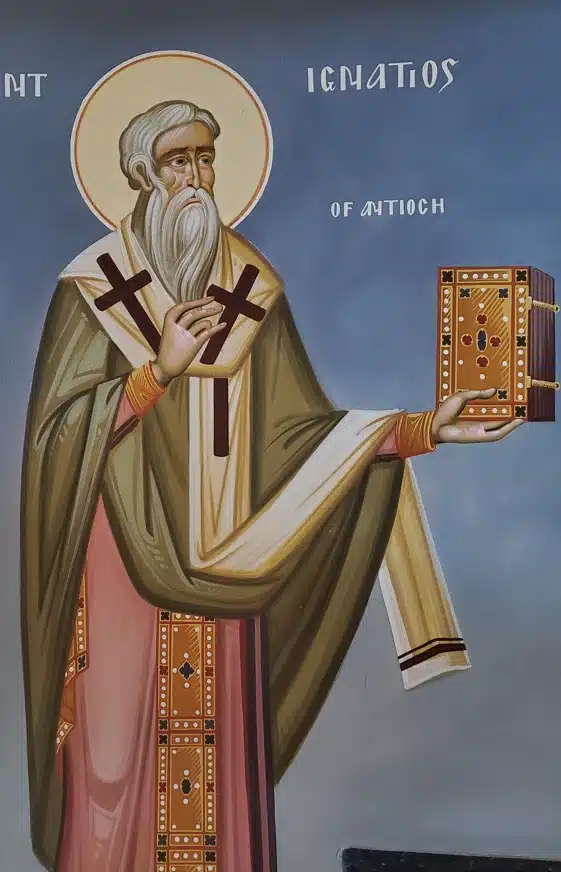
Ignatius of Antioch
Quick Answer
Ignatius of Antioch is remembered as a bishop who taught unity and faithfulness to Christ, even in the face of death.
Ignatius of Antioch stands among the earliest and most poignant voices of the Church Fathers. As bishop of Antioch in the early second century, Ignatius lived at a time when Christian leadership was still evolving. Arrested and escorted to Rome for execution, he wrote a series of letters to Christian communities along the way—letters that still resonate today.
Ignatius emphasized unity and orthodoxy above all. He insisted on the importance of the bishop as a visible sign of communal harmony and warned against divisions that could distort the faith. His theology of the Eucharist affirmed Christ’s real presence, pushing back against groups that spiritualized or denied the Incarnation.
Perhaps most striking is Ignatius’s attitude toward martyrdom. He did not seek death recklessly, but neither did he fear it. For Ignatius, martyrdom was a witness—a final sermon delivered with his life. His writings reveal a Christianity that understood unity, authority, and sacrifice as inseparable.
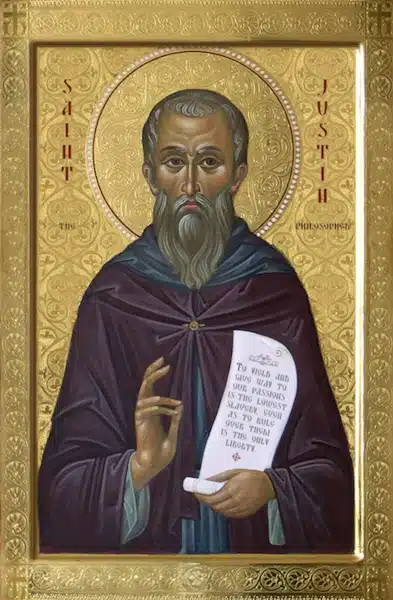
Justin Martyr is known for being an early Christian apologist who showed that faith and reason belong together.
Justin Martyr approached Christianity from a philosopher’s path. Raised in pagan traditions and trained in Greek philosophy, Justin converted to Christianity after concluding that Christ fulfilled the deepest questions philosophy could only gesture toward.
Justin’s genius lay in his ability to translate Christian belief into philosophical language without diluting its substance. He argued that Christ was the Logos—the divine Reason—anticipated by thinkers like Plato and Socrates. Christianity, he claimed, wasn’t irrational or primitive. It was the fulfillment of humanity’s search for truth.
His apologies addressed Roman authorities directly, explaining Christian worship, ethics, and beliefs in measured, logical terms. Justin’s work laid the foundation for Christian apologetics, showing that faith and reason need not be enemies. His martyrdom ultimately confirmed that intellectual defense alone couldn’t shield believers—but it could strengthen them.
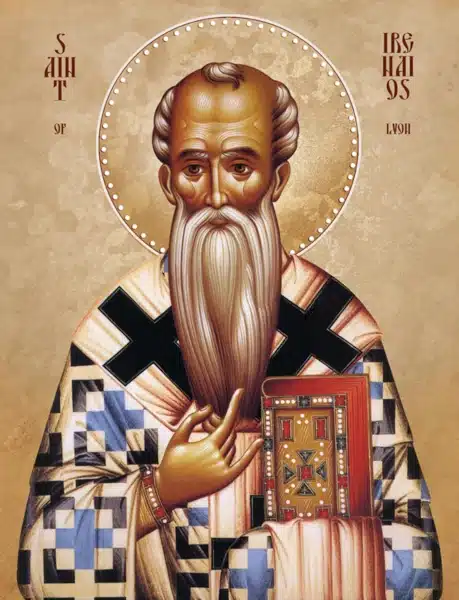
Irenaeus of Lyon is remembered for teaching that true Christian belief comes from the apostles and is preserved in the Church.
Irenaeus of Lyon was a guardian of orthodoxy in an age of theological chaos. Confronting various Gnostic movements, he insisted that authentic Christian teaching must trace itself back through the apostles. Truth, for Irenaeus, wasn’t secret or elite—it was public, communal, and historical.
His most famous work, Against Heresies, systematically dismantled alternative gospels and speculative theologies. Irenaeus emphasized the rule of faith—a shared summary of belief that eventually informed creedal statements.
One of his most enduring contributions is the concept of recapitulation: the idea that Christ re-lived and redeemed every stage of human existence. Where Adam failed, Christ succeeded. This vision framed salvation not as escape from creation, but as its healing.
Tertullian is known for shaping early Christian apologetics and for developing precise theological language to defend the faith against heresy.
Tertullian brought a sharp, uncompromising voice to early Christianity. Writing in Latin rather than Greek, he helped shape Western theological language. Terms like “Trinity” owe much to his precision—even when the doctrine itself was still developing.
Tertullian was a fierce defender of Christian morality and identity. He mocked pagan inconsistencies and challenged Christians who sought cultural compromise. His question still echoes: What has Athens to do with Jerusalem?—a challenge to uncritical blending of philosophy and faith.
Yet Tertullian’s legacy is complex. His later alignment with Montanism reflects the tensions of an uncompromising faith navigating institutional life. Still, his impact on Christian apologetics and theological vocabulary remains foundational.
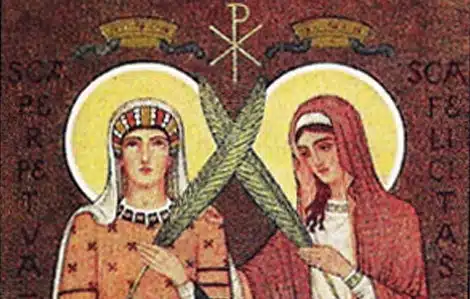
Perpetua and Felicity are known for their martyrdom, which offers a rare firsthand witness to early Christian faith, courage, and devotion under persecution.
Perpetua and Felicity remind us that not all Church Fathers shaped Christianity through treatises and sermons. Their legacy is written in blood and courage. Arrested in Carthage during persecution, these young women—one noble, one enslaved—faced execution together.
Perpetua’s prison diary offers a rare, intimate glimpse into early Christian spirituality. She wrestles with fear, familial pressure, and the cost of discipleship, yet remains resolute. Felicity, pregnant at the time of her arrest, gave birth shortly before execution so she could suffer alongside her companions.
Their martyrdom embodies early Christian piety at its most raw and powerful. Faith was not abstract belief. It was allegiance strong enough to outweigh social roles, family bonds, and even life itself.
Origen of Alexandria is known as an early Christian scholar whose writings shaped biblical interpretation, even though some of his ideas later proved controversial.
Origen was among the most brilliant—and controversial—thinkers of early Christianity. A prolific writer and teacher, he approached Scripture with intellectual rigor, developing methods of allegorical interpretation that shaped biblical scholarship for centuries.
Origen believed Scripture operated on multiple levels: literal, moral, and spiritual. This allowed him to uncover profound theological insights, but it also led him into speculative territory. Ideas about the pre-existence of souls and universal restoration sparked debate long after his death.
Despite later controversies, Origen’s devotion was unquestionable. He suffered persecution, lived ascetically, and labored tirelessly to understand God’s Word. His legacy challenges Christians to balance intellectual ambition with doctrinal humility.
Athanasius is known for for defending the full divinity of Christ and standing firmly against Arianism, shaping the teaching expressed in the Nicene Creed.
Athanasius became the face of resistance against Arianism, the belief that Christ was a created being rather than fully divine. Though this view gained widespread political support, Athanasius stood firm, enduring exile after exile for his convictions.
His defense of Christ’s full divinity shaped the Nicene Creed, anchoring Christian belief in the confession that the Son is “of one substance” with the Father. Athanasius understood that salvation itself was at stake—only God could truly save humanity.
His perseverance earned him the phrase Athanasius contra mundum—Athanasius against the world. It’s a reminder that truth doesn’t always travel with the majority.
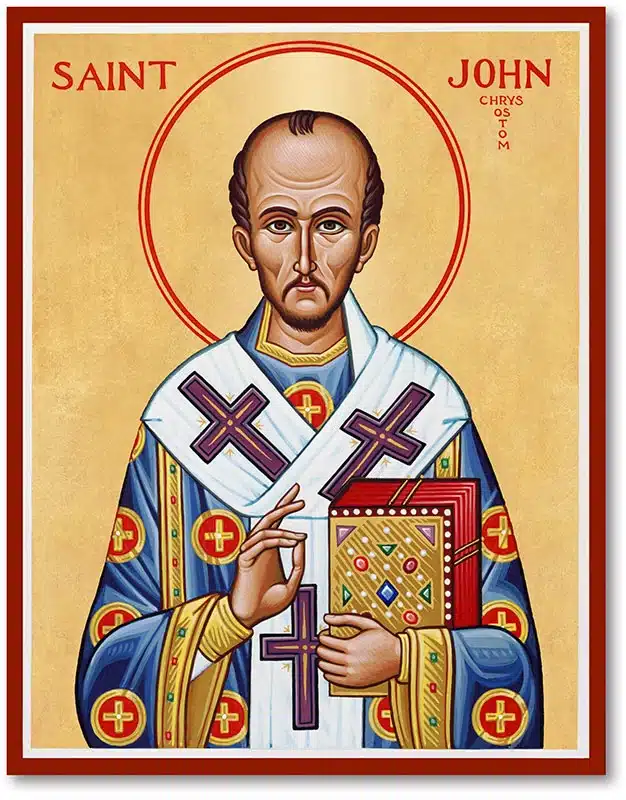
John Chrysostom is known for his powerful preaching, clear teaching on Scripture, and moral courage as a bishop who challenged corruption and injustice.
John Chrysostom, whose name means “golden-mouthed,” transformed Christian preaching. His sermons were clear, practical, and morally demanding. He spoke against wealth inequality, clerical corruption, and spiritual complacency.
As bishop of Constantinople, his fearless preaching earned both admiration and enemies. Ultimately exiled, Chrysostom died far from the city he tried to reform. Yet his homilies continue to shape Christian preaching and biblical interpretation.
“Therefore, brethren, stand fast and hold the traditions which you have been taught, whether by word or by our letter”
(2 Thessalonians 2:15). From this it is clear that the apostles did not hand down everything by letter. Much was also handed on unwritten.
Like what was written, the unwritten is also worthy of belief. So let us regard the tradition of the Church as worthy of belief.
Is it a tradition? Seek no further.
Homilies on Second Thessalonians (A.D. 402)
Why it matters: John Chrysostom emphasizes that apostolic teaching was transmitted both through Scripture and through living tradition. This reflects how the early Church understood authority, continuity, and fidelity to the apostles long before later theological divisions.
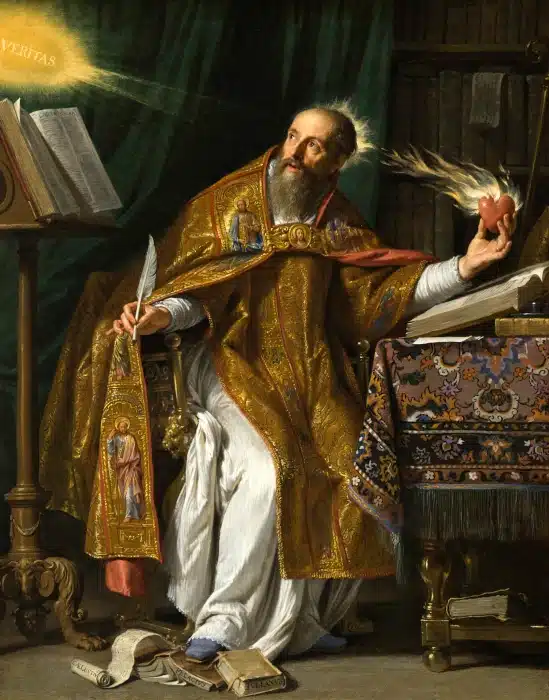
Augustine is known for his conversion to Christianity and for shaping Western Christian theology through works like Confessions and The City of God.
Augustine’s journey from restless seeker to Christian bishop remains one of Christianity’s most compelling stories. His Confessions blend autobiography, prayer, and philosophy, offering a deeply human exploration of sin, grace, and desire.
Augustine shaped doctrines of grace, original sin, and divine sovereignty, while also engaging classical philosophy with unmatched depth. Works like The City of God reimagined Christian hope amid the collapse of the Roman world.
Few thinkers have influenced Western Christianity as profoundly as Augustine. His questions still feel personal. His answers still provoke thought.
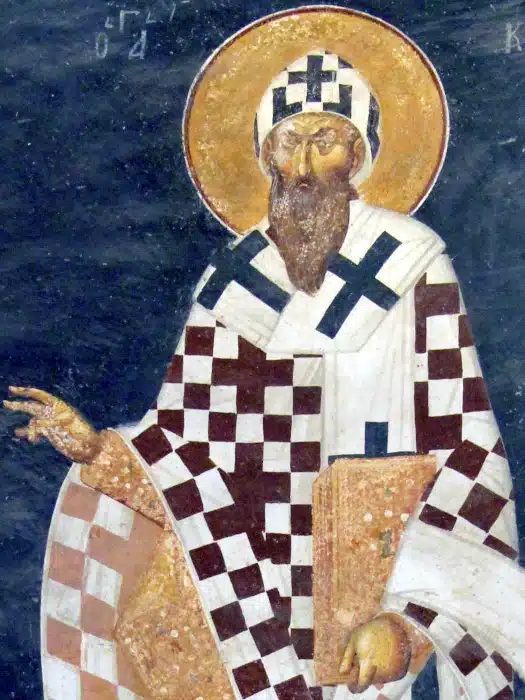
Cyril is known for for defending the unity of Christ’s divine and human natures and for shaping Christological teaching later affirmed at the Council of Chalcedon.
Cyril of Alexandria played a central role in Christological debates, particularly regarding how Christ’s divine and human natures relate. His insistence on the unity of Christ’s person influenced definitions later affirmed at the Council of Chalcedon.
Cyril’s theological precision helped safeguard orthodox teaching, even as his methods sometimes reflected the contentious atmosphere of his time. His legacy reminds us that doctrine often emerges through intense, imperfect human struggle.
The Church Fathers shaped Christian doctrine The Church Fathers shaped Christian doctrine by clarifying core beliefs, forming early creeds, and protecting the faith from distortion during times of persecution and disagreement.
Together, the Church Fathers shaped Christianity’s doctrinal backbone. They articulated the Trinity, defended the Incarnation, clarified salvation, and established creeds that continue to anchor Christian belief. Their work influenced how Scripture was interpreted, how authority was understood, and how faith was passed on.
In Plain English
Creeds and doctrines formed as the early Church responded to real questions, disagreements, and misunderstandings about who Christ is and what Christians believe. Church leaders gathered, prayed, studied Scripture, and clarified the faith in precise language so it could be taught consistently and passed on faithfully.
The Church Fathers help modern Christians understand the roots of their faith and how it was faithfully handed on through history.
Modern Christians sometimes assume early theology is outdated or irrelevant. In truth, many contemporary debates echo ancient ones. Questions about authority, identity, morality, and truth haven’t gone away.
The Church Fathers offer perspective. They remind us that Christianity was forged in dialogue, disagreement, and devotion. They show that faith can be intellectually robust, morally demanding, and spiritually deep—without becoming rigid or hollow.
Engaging their writings doesn’t require abandoning modern thought. It requires humility—the willingness to learn from those who walked closer to the foundations.
Featured Snippet
Are the Church Fathers still relevant? They were the closest generation to the apostles, shaping how Christianity understood Scripture, Christ, the Trinity, and the Church itself. Their writings didn’t invent new beliefs; they clarified and defended the faith as it was handed down, especially when confusion or division arose.
Even now, the Church Fathers help Christians stay rooted. They remind us how core doctrines were formed, how Scripture was read in the early Church, and how unity in Christ was preserved amid disagreement. In a time when beliefs can easily drift, their voices still anchor Christianity to its original faith—tested, lived, and passed on.
The Church Fathers guided the early Church through challenge and uncertainty. They clarified belief, protected unity, and lived the faith with conviction. Their witness still shapes how Christians understand faith today.
The Church Fathers were not perfect, but they were faithful. They asked hard questions, endured immense pressures, and handed down a faith tested by fire. Their enduring influence invites modern readers to slow down, listen carefully, and engage Christianity at its roots.
To read the Church Fathers is to rediscover a faith that knew its cost—and believed it was worth paying.
Try This This Week
Guided Augustinian Prayer Reflection
Use this as a short prayer moment, reflection exercise, or devotional.
Begin by becoming still.
Take a slow breath and place yourself in God’s presence.
Turn inward.
Ask yourself honestly: What am I longing for right now? What is restless in my heart? Do not judge or correct these thoughts—simply notice them.
Speak plainly to God.
In your own words, tell God what you desire, what weighs on you, and where you feel unsettled. Augustine reminds us that God already knows the heart, so prayer begins with truth, not polish.
Listen in silence.
Sit quietly for a moment and ask God to order your desires—drawing you away from what does not last and toward what truly gives life.
Close with trust.
End by praying, "Lord, you have made us for yourself. Teach my heart to rest in you."
Institute, ~ MD Harris. (2023, October 9). Church fathers – leaders in early post-apostolic Christianity. We go to hard places and do hard things for the Church and community.
As you reflect on the witness of the Church Fathers and the prayer traditions they shaped, consider taking one small next step within the life of San Isidro Catholic Church.
Join a faith formation opportunity, spend time with Scripture in prayer, or explore a spiritual practice that helps you listen more closely to God.
The same faith that sustained the early Church continues to grow today—through ordinary people who choose to seek truth, pray deeply, and walk together in Christ.
The Church Fathers were early Christian leaders—bishops, teachers, and martyrs—who defended the faith after the apostles and helped define Christian doctrine through preaching and writing.
Why are the Church Fathers important?
They clarified Christian orthodoxy during persecution and controversy, helped the Church respond to heresies, and influenced core doctrines and creeds that still shape Christianity today.
Who are some of the most important Church Fathers?
Frequently studied Church Fathers include Ignatius of Antioch, Justin Martyr, Irenaeus of Lyon, Tertullian, Perpetua and Felicity, Origen of Alexandria, Athanasius of Alexandria, John Chrysostom, Augustine of Hippo, and Cyril of Alexandria.
What is post-apostolic Christianity?
Post-apostolic Christianity describes the era after the apostles, when Christian communities expanded across the Roman Empire and faced persecution, internal disputes, and emerging theological controversies.
What were early Church heresies?
Early Church heresies were teachings that conflicted with apostolic Christian belief—often involving Christ’s divinity, His humanity, the Trinity, or salvation. The Church Fathers wrote to correct these errors and preserve unity.
How did the Nicene Creed relate to the Church Fathers?
The Nicene Creed emerged from early doctrinal disputes, especially over Arianism. Church Fathers like Athanasius defended the belief that Jesus Christ is fully divine, helping shape the Creed’s language.